
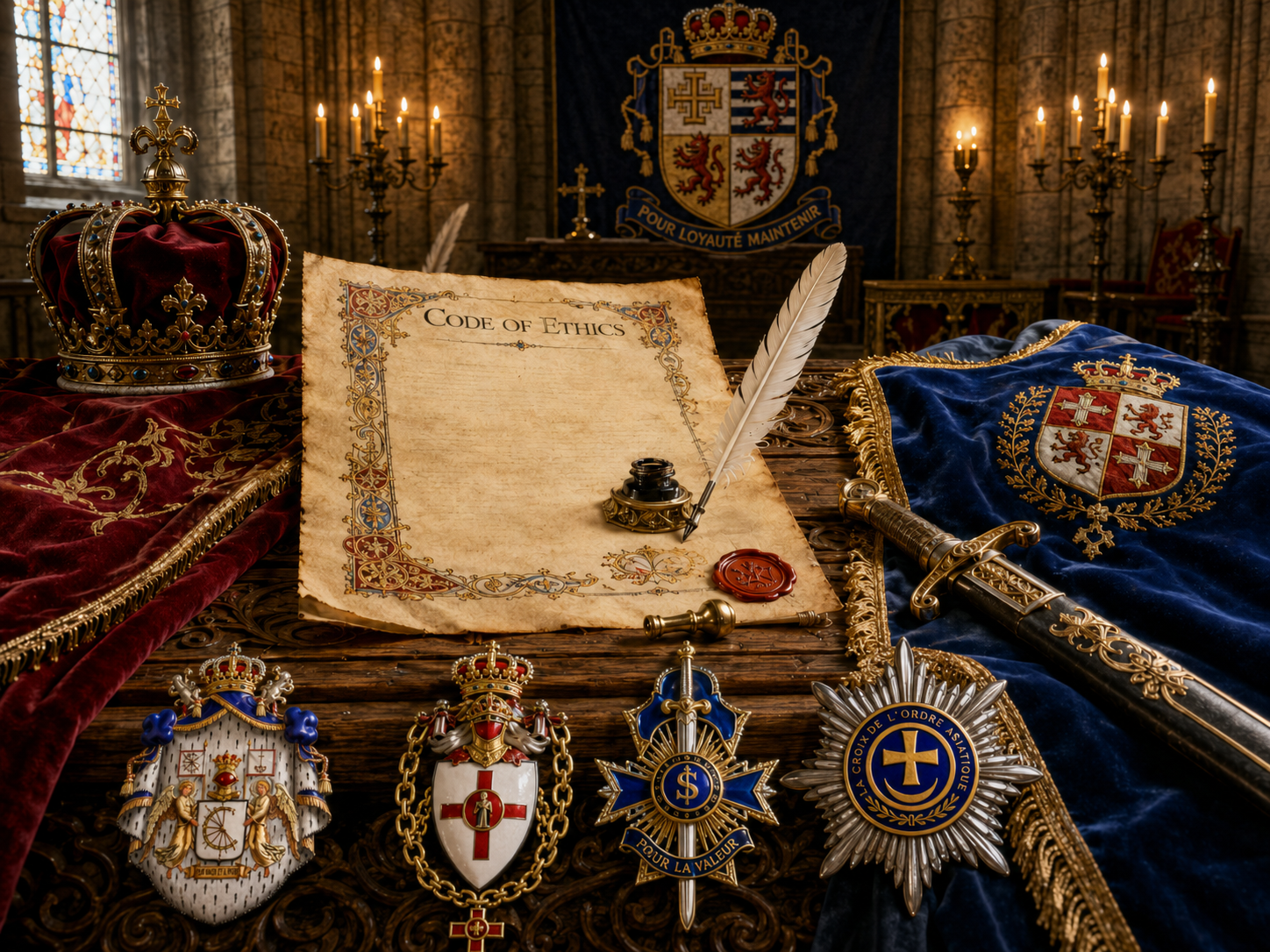
CODE OF ETHICS of the Royal House of De Lusignan and its Four Chivalric Orders
Explore the Royal House of Lusignan Code of Ethics, setting out the Christian, chivalric and disciplinary principles governing its four noble Orders.
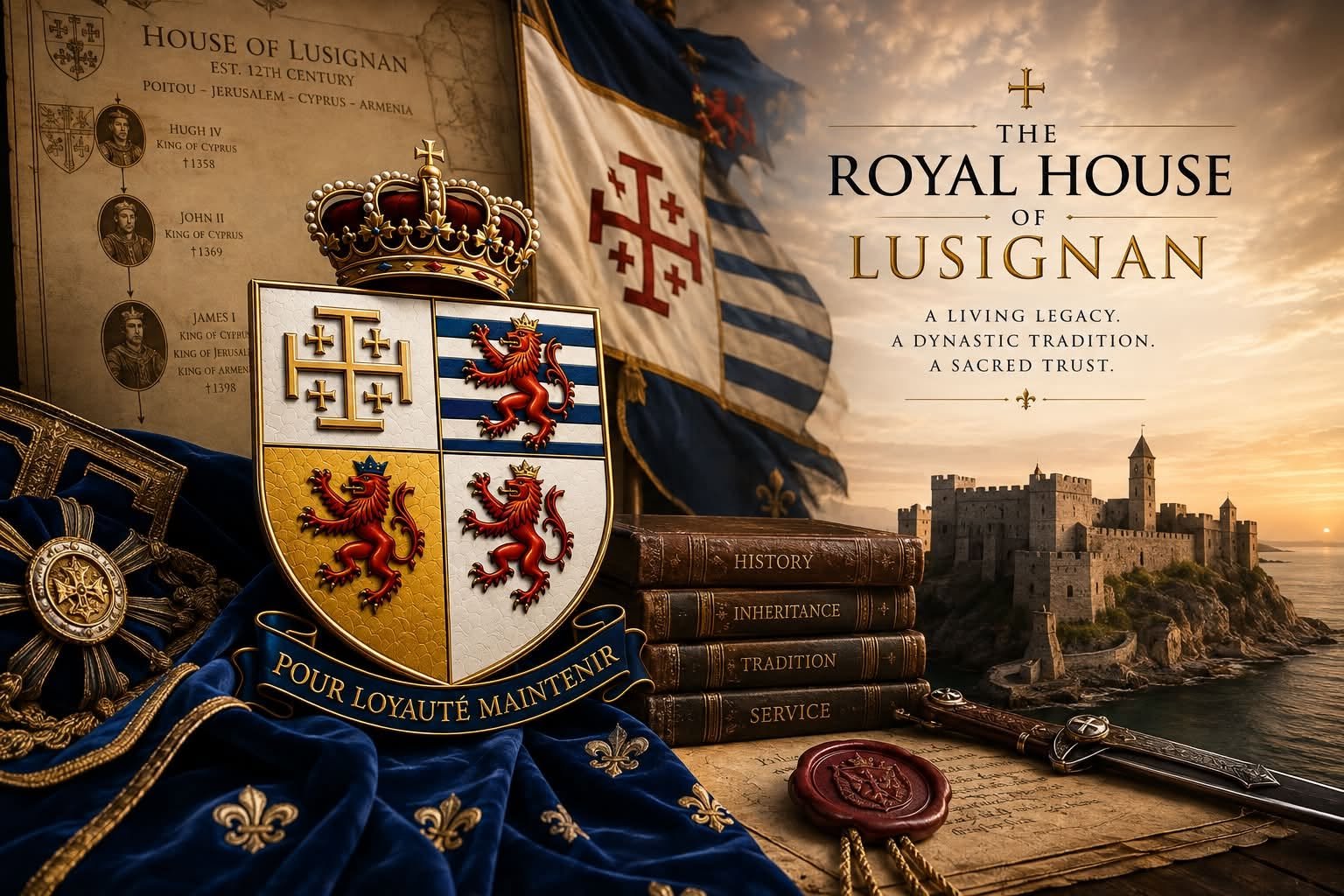
Custodianship, Contested History and the Lusignan–Kalfa Nar Bey Tradition
The Position of the Contemporary Royal House of Lusignan
Recent commentary concerning the nineteenth-century Armenian intellectual Ambroise Calfa, subsequently known as Guy de Lusignan–Calfa Nar Bey, has revived an old controversy surrounding the later history of the House of Lusignan.
An article published by The California Courier, entitled “A Princely Ploy: Inside the Ruse of a French-Armenian Scammer”, presents Calfa essentially as an impostor who appropriated the Lusignan identity and subsequently exploited chivalric traditions for social and financial advantage.
The contemporary Royal House of Lusignan does not accept that this narrative, standing alone, settles the historical question.
Heritage, Continuity and Purpose
The Royal House of Lusignan stands today as a custodian of the Lusignan dynastic tradition—preserving a remarkable inheritance whose documented history reaches from medieval France to Jerusalem, Cyprus and Cilician Armenia.
The medieval House of Lusignan is firmly established in history. From its origins in Poitou, members of the dynasty became Kings of Jerusalem and Cyprus, while the Lusignan name became intertwined with the Crown of Cilician Armenia. This extraordinary heritage forms the historical foundation upon which the contemporary House looks back.
Our responsibility, however, is not to romanticise or rewrite that history.
The later story of Lusignan dynastic continuity is more complex. The contemporary House preserves a genealogical and dynastic tradition through later Lusignan lines and the Lusignan–Kalfa Nar Bey succession, while recognising that aspects of this later history remain matters of scholarly and genealogical debate.
We believe historical integrity requires that distinction.
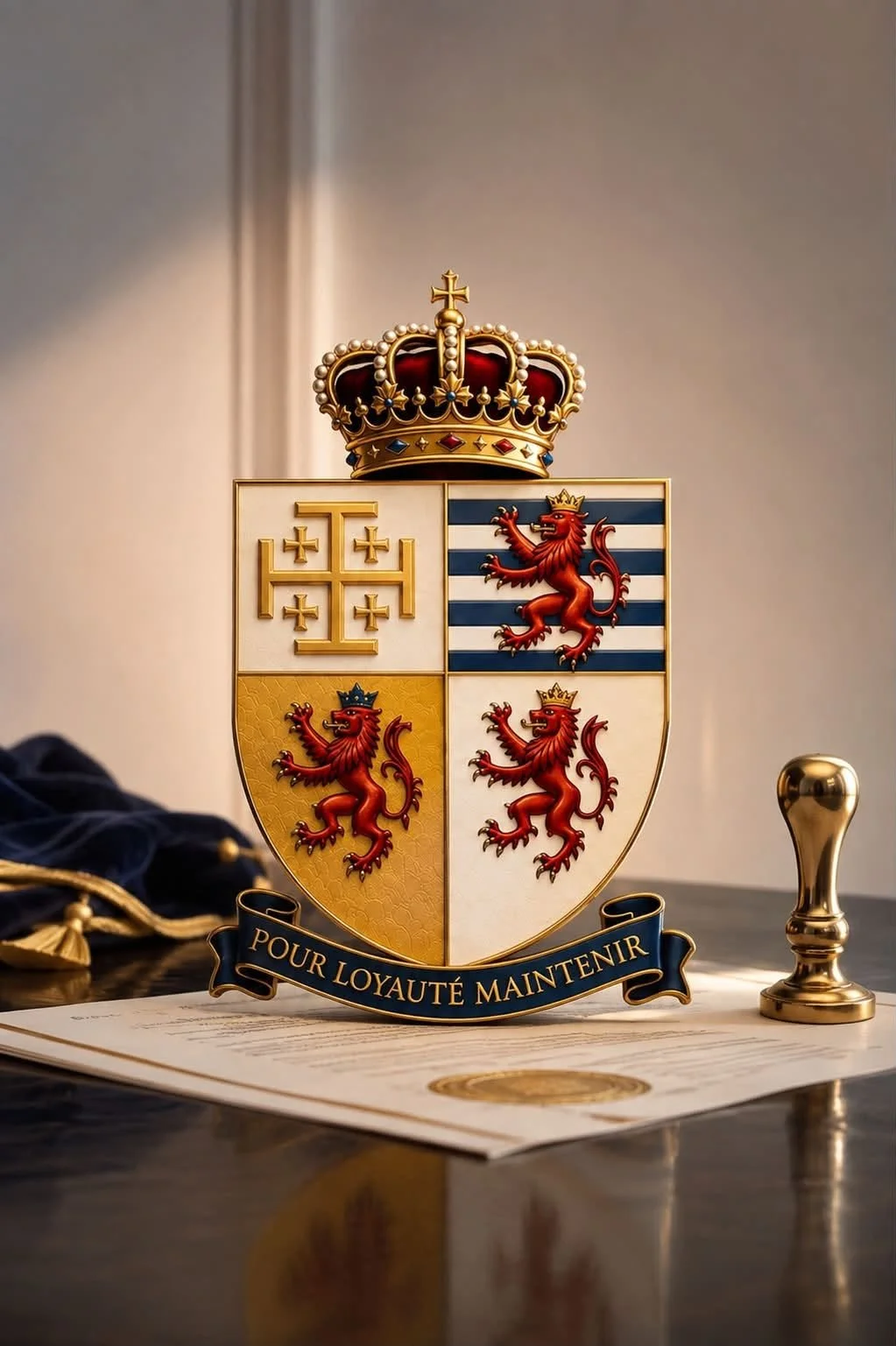
The Crown Without a Kingdom
The Dynastic Authority of the Royal House of Lusignan to Confer Royal and Noble Dignities
History, Hereditary Sovereignty, Fons Honorum and the Continuing Jurisdiction of a Royal House
There is a fundamental question which must be confronted whenever a historic royal dynasty no longer governs the territory over which its ancestors once reigned:
Does the disappearance of political sovereignty necessarily extinguish the dynasty itself—and with it every hereditary, heraldic, nobiliary and chivalric prerogative once belonging to the Crown?
In the case of the Royal House of Lusignan, the answer requires considerably more sophistication than either unquestioning acceptance or casual dismissal.
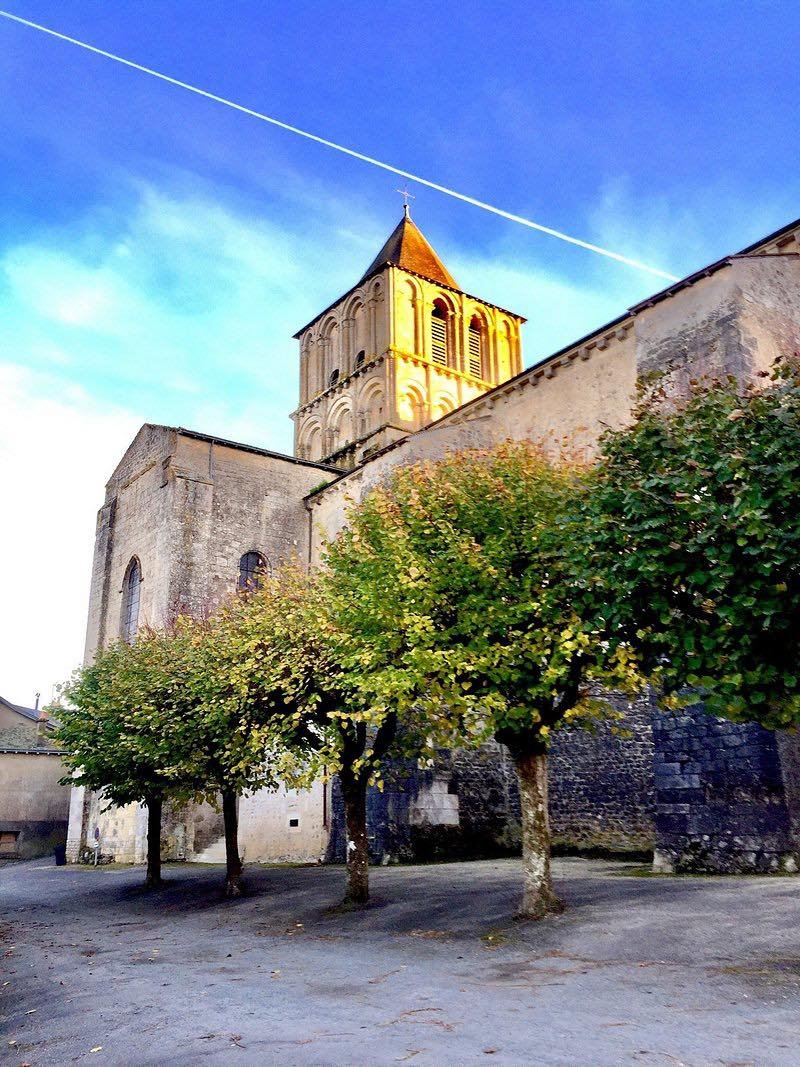
Ancient Stronghold to Modern Community
Nestled in the heart of the Vienne department in the Nouvelle-Aquitaine region of western France, the Commune of Lusignan holds a remarkable place in the historical, dynastic, and cultural heritage of France and Europe. Known primarily as the cradle of the House of Lusignan, this town has witnessed centuries of transformation—from its mythic beginnings and feudal power to a vibrant contemporary community.
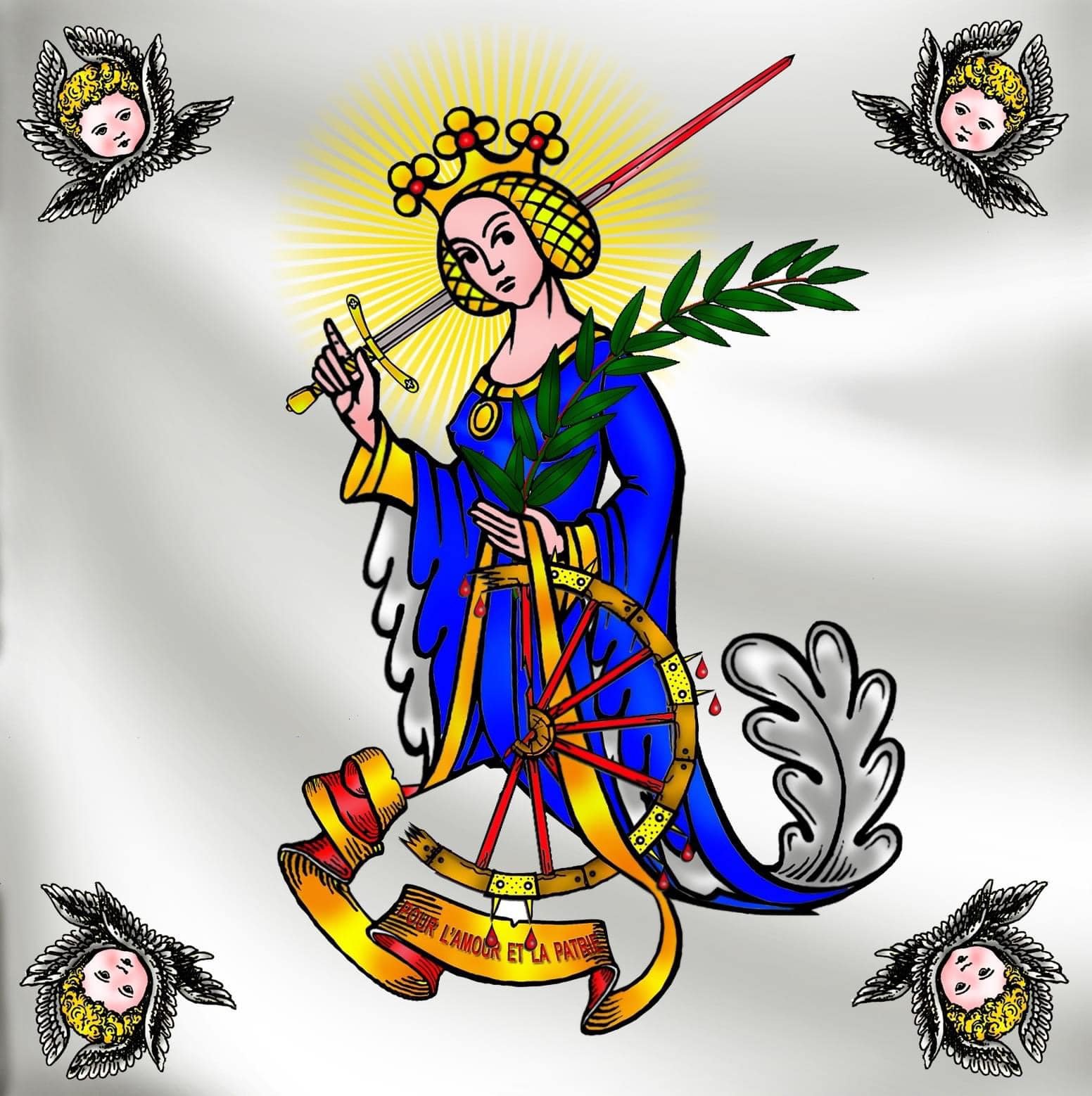
The Order of Saint Catherine with Mount Sinai: A Historical and Academic Account
The Order of Saint Catherine with Mount Sinai is a unique religious and chivalric phenomenon that spans from Byzantine monastic origins to late medieval crusader politics and continues as a modern revival under the House of Lusignan. Rooted in the veneration of Saint Catherine of Alexandria and the monastic traditions of Mount Sinai, the Order has historically functioned at the crossroads of faith, politics, and pilgrimage. Its evolution reflects deep Byzantine and Latin Christian influences, political patronage—especially from the Lusignan dynasty of Cyprus—and contemporary efforts to reframe this tradition as a chivalric order.
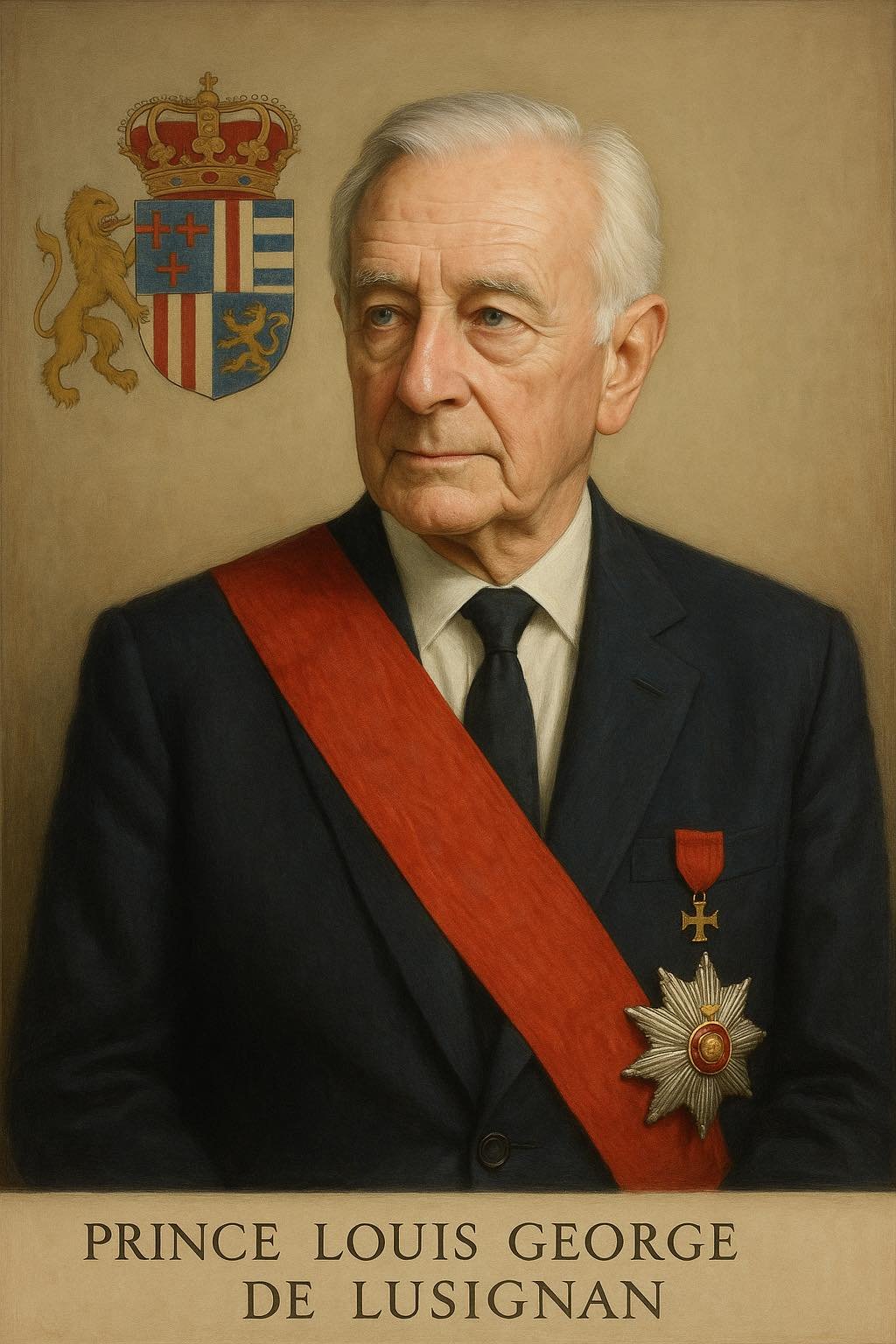
The Full Chronicle of a Living Royal House
The House of Lusignan is among the most enduring noble dynasties of Europe and the Levant. From their mystical founding in France to their crusader legacy in the East, and their modern embodiment in the Kalfa Nar Bey line, the Lusignans defy extinction through continuous evolution, dynastic dispersion, and institutional revival. This article weaves a comprehensive narrative of the French, Crusader, Cypriot-Armenian, and Russian-Eastern branches, culminating in the modern Grand Masters of the Royal House of Lusignan.
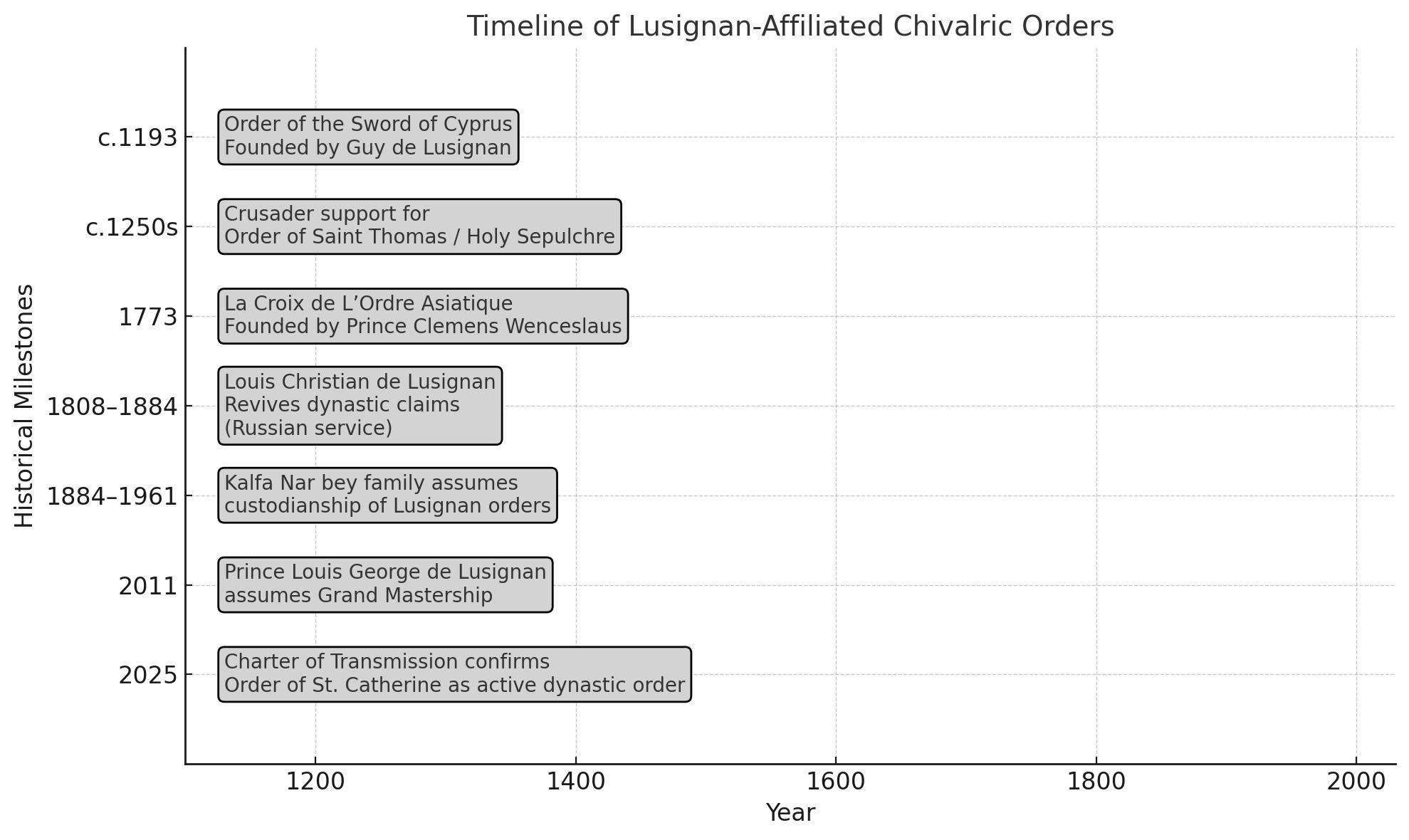
Heritage over a symbolic chivalric network
The modern Royal House of Lusignan, particularly under the Kalfa Nar bey dynasty (Prince Louis George de Lusignan), claims heritage over a symbolic chivalric network that draws on medieval, Crusader, and dynastic traditions. Here is a summary of the key orders associated with this lineage:


Are You Called to Serve with Honour?
The Chivalric Orders of Saint Catherine of Mount Sinai, The Order of Saint Blaise, La Croix de L’Ordre Asiatique and The Order of the Sword - of The House of Lusignan.

The House of Lusignan
The House of Lusignan is a royal house of French origin, which at various times ruled several principalities in Europe and the Levant, including the kingdoms of Jerusalem, Cyprus, and Armenia, from the 12th through the 15th centuries during the Middle Ages. It also had great influence in England and France.
The family originated in Lusignan, in Poitou, western France, in the early 10th century.

The star of the Order of St. Catherine
The star of the Order of St. Catherine of Mount Sinai, containing the quartered arms of Jerusalem, Lusignan/Luxembourg, Cyprus, and Armenian Cilicia.

Two pillars of knighthood
Throughout history, two pillars of knighthood have shaped the chivalric tradition: Ecclesiastical Orders and Royal Orders of Chivalry. While both uphold honour, service, and ceremonial grandeur, their origins, authority, and missions differ in profound and meaningful ways.